IP-Academy

Novelty
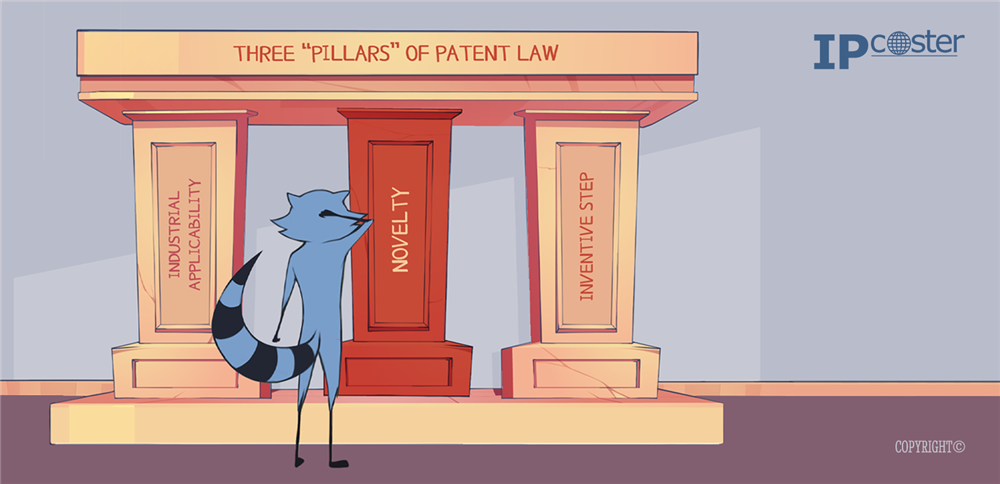
In order for a patent application to be considered as registrable, there are three vital elements that must be satisfied. This trinity of the "three pillars" of patentability requires that the invention claimed in a patent application has novelty, industrial applicability and an inventive step.
The element of novelty, or "newness" for a patent application is therefore crucial. As per the European Patent Convention (EPC), an invention is regarded as novel if it "does not form part of the state of the art".
State of the art is defined as any subject matter relating to the invention to which a patent application relates, which has been disclosed or made available to the public in any manner prior to the patent application filing date. Such subject matter may include a product, process, or any other relevant information regarding the invention claimed.
In the instance that public disclosure had been made for any reason prior to the filing of a patent application, it may be the case that the requirement of novelty is not fulfilled, and the invention contained therein is rendered unregistrable.
On the flip side, patent legislation in many jurisdictions offers a novelty grace period. This constitutes a specific period of time, typically 6 or 12 months prior to the date of filing a patent application, depending on the country. For example, the US and Canada, among others, provide for a 12-month grace period, whereas other countries, such as France and the United Kingdom, afford applicants a 6-month novelty grace period.
A grace period itself ensures that any disclosure concerning the patent application materials or subject matter within that set time period is not seen to be detrimental to the requirement of novelty of an invention.
As typical with any legislation, each jurisdiction sets forth varying conditions upon which an applicant can take advantage of the novelty grace period. Some countries, for example, recognise disclosure as authorized if said disclosure is made at an officially recognized event, such as an official exhibition, or a scientific presentation, so long as such official disclosure is made within the prescribed grace period time limit prior to the filing date. Other jurisdictions may exclude disclosure from the prior art if such disclosure was made in bad faith by a third party, so long as corresponding proof is provided.
If any unauthorized disclosure has been made, it is classified as part of the "prior art". Prior art constitutes anything that is similar in nature to the invention contained within a patent application, and had been disclosed prior to the application filing date.
Prior art can comprise a wide variety of matter, including articles, scientific periodicals, pending patent applications, both commercially available and unavailable products, oral presentations, and even social media content. The only exceptions to any related disclosure being considered as prior art are if the disclosed subject matter is confidential and related to government, trade secrets or other applicable circumstances, or if the material was insufficiently disclosed.
With prior art being a vastly broad concept, it is vital for IP applicants to carefully and closely analyze any potential previously disclosed subject matter to avoid the possibility of their invention being considered as not novel or new. The option of performing a search is highly useful in this regard. For example, a PCT application will be subject to an international search, undertaken by a competent International Searching Authority (ISA), resulting in an International Search Report (ISR).
An ISR details any prior art found by the search which may impact the patentability of the subject matter contained within the international application. A preliminary Written Opinion of the International Searching Authority (WOISA) is also provided, advising whether the invention claimed in the international application appears to meet all three of the patentability criteria. Similar searches can be performed for national and regional patent applications, depending on the jurisdiction.
Related articles
Under the Patent Cooperation Treaty (PCT), applicants must enter the national or regional phase of the application process within a specified timeframe—usually 30 or 31 months from the priority date (earliest filing date). This timeframe varies slightly by country or region and is crucial for preserving patent rights in each designated jurisdiction. Some jurisdictions allow for extensions or reinstatements of rights under specific conditions, often involving additional fees.
Below is a detailed chart of the national phase deadlines for each PCT contracting state and regional office under Chapter I (Article 22) and Chapter II (Article 39(1)) procedures, including footnotes that highlight exceptions, regional considerations (e.g., ARIPO, EPO, OAPI), and special cases:
| Designated/Elected Office |
Chapter I (under PCT Article 22) |
Chapter II (under PCT Article 39(1)) |
|
|---|---|---|---|
| AE | United Arab Emirates | 30 | 30 |
| AG | Antigua and Barbuda | 30 | 30 |
| AL | Albania1 | 31 | 31 |
| AM | Armenia2 | 31 | 31 |
| AO | Angola | 30 | 30 |
| AP | African Regional Intellectual Property Organization4 | 31 | 31 |
| AT | Austria1 | 30 | 30 |
| AU | Australia | 31 | 31 |
| AZ | Azerbaijan2 | 30 | 31 |
| BA | Bosnia and Herzegovina | 34 | 34 |
| BB | Barbados | 30 | 30 |
| BG | Bulgaria1 | 31 | 31 |
| BH | Bahrain | 30 | 30 |
| BN | Brunei Darussalam | 30 | 30 |
| BR | Brazil | 30 | 30 |
| BW | Botswana6 | 31 | 31 |
| BY | Belarus2 | 31 | 31 |
| BZ | Belize | 30 | 307 |
| CA | Canada | 3015 | 3015 |
| CH | Switzerland1, 9 | 30 | 30 |
| CL | Chile | 30 | 30 |
| CN | China | 30 (32)8 | 30 (32)8 |
| CO | Colombia | 31 | 31 |
| CR | Costa Rica | 31 | 31 |
| CU | Cuba | 30 | 30 |
| CZ | Czech Republic1 | 31 | 31 |
| DE | Germany1 | 31 | 31 |
| DJ | Djibouti | 30 | 30 |
| DK | Denmark1 | 31 | 31 |
| DM | Dominica3 | 30 | 30 |
| DO | Dominican Republic | 30 | 30 |
| DZ | Algeria | 31 | 31 |
| EA | Eurasian Patent Organization | 31 | 31 |
| EC | Ecuador | 31 | 31 |
| EE | Estonia1 | 31 | 31 |
| EG | Egypt | 30 | 30 |
| EP | European Patent Organisation10 | 31 | 31 |
| ES | Spain1 | 30 | 30 |
| FI | Finland1 | 31 | 31 |
| GB | United Kingdom1 | 31 | 31 |
| GD | Grenada3 | 30 | 30 |
| GE | Georgia | 31 | 31 |
| GH | Ghana6 | 30 | 30 |
| GM | Gambia6 | 30 | 31 |
| GT | Guatemala | 30 | 30 |
| HN | Honduras | 30 | 30 |
| HR | Croatia1 | 31 | 31 |
| HU | Hungary1 | 31 | 31 |
| ID | Indonesia | 315 | 315 |
| IL | Israel | 30 | 30 |
| IN | India | 31 | 31 |
| IQ | Iraq3 | 30 | 30 |
| IR | Iran (Islamic Republic of) | 30 | 30 |
| IS | Iceland1 | 31 | 31 |
| IT | Italy1 | 3016 | 3016 |
| JM | Jamaica | 30 | 30 |
| JO | Jordan | 30 | 30 |
| JP | Japan | 30 | 30 |
| KE | Kenya6 | 30 | 30 |
| KG | Kyrgyzstan2 | 31 | 31 |
| KH | Cambodia | 30 | 30 |
| KN | Saint Kitts and Nevis | 30 | 30 |
| KP | Democratic People’s Republic of Korea | 30 | 30 |
| KR | Republic of Korea | 31 | 31 |
| KW | Kuwait | 30 | 30 |
| KZ | Kazakhstan2 | 31 | 31 |
| LA | Lao People’s Democratic Republic | 31 | 31 |
| LC | Saint Lucia3 | 30 | 30 |
| LK | Sri Lanka | 30 | 30 |
| LR | Liberia6 | 30 | 31 |
| LS | Lesotho6 | 30 | 31 |
| LU | Luxembourg1 | 2011 | 30 |
| LY | Libya3 | 30 | 30 |
| MA | Morocco | 31 | 31 |
| MD | Republic of Moldova | 31 | 31 |
| ME | Montenegro3 | 30 | 30 |
| MG | Madagascar | 30 | 30 |
| MK | North Macedonia1 | 31 | 31 |
| MN | Mongolia | 31 | 31 |
| MW | Malawi6 | 30 | 30 |
| MX | Mexico | 30 | 30 |
| MY | Malaysia | 30 | 30 |
| MZ | Mozambique6 | 31 | 31 |
| NA | Namibia6 | 31 | 31 |
| NG | Nigeria | 30 | 30 |
| NI | Nicaragua | 30 | 30 |
| NO | Norway1 | 31 | 31 |
| NZ | New Zealand | 31 | 31 |
| OA | African Intellectual Property Organization12 | 30 | 30 |
| OM | Oman | 30 | 30 |
| PA | Panama | 30 | 30 |
| PE | Peru | 30 | 30 |
| PG | Papua New Guinea | 31 | 31 |
| PH | Philippines | 30 (318) | 30 (318) |
| PL | Poland1 | 30 | 30 |
| PT | Portugal1 | 30 | 30 |
| QA | Qatar | 30 | 30 |
| RO | Romania1 | 30 | 30 |
| RS | Serbia1 | 3013 | 3013 |
| RU | Russian Federation2 | 31 | 31 |
| RW | Rwanda3, 6 | 30 | 30 |
| SA | Saudi Arabia | 30 | 30 |
| SC | Seychelles | 31 | 31 |
| SD | Sudan6 | 30 | 30 |
| SE | Sweden1 | 31 | 31 |
| SG | Singapore | 3014 | 3014 |
| SK | Slovakia1 | 31 | 31 |
| SL | Sierra Leone6 | 31 | 31 |
| ST | Sao Tome and Principe3, 6 | 30 | 30 |
| SV | El Salvador | 30 | 30 |
| SY | Syrian Arab Republic | 31 | 31 |
| TH | Thailand | 30 | 30 |
| TJ | Tajikistan2 | 30 | 31 |
| TM | Turkmenistan2 | 30 | 31 |
| TN | Tunisia | 30 | 30 |
| TR | Türkiye1 | 30 (338) | 30 (338) |
| TT | Trinidad and Tobago | 30 | 31 |
| TZ | United Republic of Tanzania6 | 2111 | 31 |
| UA | Ukraine | 31 | 31 |
| UG | Uganda6 | 30 | 31 |
| US | United States of America | 30 | 30 |
| UZ | Uzbekistan | 31 | 31 |
| VC | Saint Vincent and the Grenadines | 31 | 31 |
| VN | Vietnam | 31 | 31 |
| WS | Samoa | 31 | 31 |
| ZA | South Africa | 31 | 31 |
| ZM | Zambia6 | 30 | 30 |
| ZW | Zimbabwe6 | 30 | 31 |
- 1. If designated for a European patent, see EP as designated Office for the applicable time limits.
- 2. If designated for a Eurasian patent, see EA as designated Office for the applicable time limits.
- 3. In the absence of information from the Office concerned, the time limits shown are those which would normally apply under PCT Articles 22(1) and 39(1)(a). If the Office decides to apply longer time limits, that information will be published in the PCT Newsletter.
- 4. ARIPO acts as designated office for the following State which does not act in the capacity of designated office: SZ.
- 5. This time limit may be extended provided that the applicant pays an additional fee for late entry into the national phase.
- 6. If designated for an ARIPO patent, see AP as designated office for the applicable time limits.
- 7. May be extended upon written request of the applicant.
- 8. Time limit applicable if applicant pays an additional fee for late entry into the national phase.
- 9. Swiss Office acts as designated one for the following State which does not act in the capacity of designated office: LI.
- 10. EPO acts as designated office for the following States which do not act in the capacity of designated office : BE, CY, FR, GR, IE, LT, LV, MC, MT, NL, SI, SM.
- 11. This Office has notified the International Bureau of the non-applicability of the 30-month time limit under PCT Article 22(1), as modified with effect from 1 April 2002 – it does not yet apply the 30-month time limit for entering the national phase.
- 12. OAPI acts as designated office for the following States which do not act in the capacity of designated office : BF, BJ, CF, CG, CI, CM, GA, GN, GQ, GW, KM, ML, MR, NE, SN, TD, TG.
- 13. The time limit may be extended by 30 days if the applicant pays an additional fee for late entry into the national phase.
- 14. The time limit may be extended by up to 18 months provided the applicant pays the prescribed fee.
- 15. Up to 12 months after the 30-month deadline (30 months from the priority date) the applicant can request reinstatement of rights provided that he/she pays the fee for reinstatement of rights and meets the other requirements outlined in subsection 154(3) of the Canadian Patent Rules for the reinstatement of rights.
- 16. For international applications filed on or after July 1, 2020.
Under Article 115 of the European Patent Convention (EPC), any person can submit comments, known as Third-Party Observations (TPOs), on a European patent application or a pending European patent. These observations are intended to assist examiners at the European Patent Office (EPO) by providing relevant information that may affect the patentability of an invention.
Third-party observations allow individuals or organizations to highlight issues with a pending patent, such as:
· Lack of novelty
· Lack of inventive step
· Insufficient disclosure
· Unclear claims
· Amendments that violate EPC rules
TPOs are a helpful way to ensure that patents are granted only when they fully meet the legal requirements.
Submitting a well-supported, non-anonymous TPO during the examination phase can actually accelerate the process. While it won’t speed up the entire examination (as a PACE request might), it can prompt a faster response from the examiner in the form of the next Office Action.
TPOs are sent to both the examiner and the applicant, who may respond or amend their claims as a result. In some cases, this could lead to a patent being granted with a reduced scope, or even refused if significant issues are raised.
When and How to Submit a TPO
To be effective, a TPO must be submitted while the application is still under examination. Observations filed after a patent is granted will not be considered or made available for public viewing. You can submit a TPO through an online form on the EPO website. Key points:
· No official fee is required.
· Observations must be written in English, German, or French (the official languages of the EPO).
· Supporting documents can be in any language, but the EPO may request the translation within a set timeframe.
Third-party observations (TPOs) can be submitted anonymously; however, the person or entity submitting them must not already be involved in the patent proceedings and cannot become a party to the case after filing. While anonymity allows for confidential input, the EPO does not provide updates or feedback to the submitter regarding how the observation is handled. Any impact the TPO has on the examination process will be reflected in the official documents and correspondence made publicly available in the application file.
TPOs help maintain the quality and integrity of the European patent system. By allowing input from outside parties, the EPO benefits from additional knowledge and technical insights, leading to stronger, more reliable patents across the EU.
The European Patent Office (EPO) is a regional intellectual property office which contributes to a unified patent system across member states, streamlining the process for the protection of patents across the region. It is headquartered in Munich, Germany, with several other branch offices present in cities across Europe.
The EPO is the executive arm of the European Patent Organisation, an intergovernmental structure established on October 7, 1977, on the basis of the European Patent Convention (EPC) signed in 1973. The organization has grown to include all 27 member states of the European Union, alongside other non-EU states, bringing the total number of EPO member states to 39 inclusive of 44 respective countries.
The EPO operates alongside the EPC, a treaty which provides a legal framework for the granting of European patents by way of a single, harmonized procedure before the EPO. This mechanism allows the EPO to function as a centralized patent office for European member states, allowing applicants to file for protection of their inventions via a more simplified route when compared with filing for patent protection separately in each respective country. As such, the EPO plays a pivotal role in the intellectual property field of the region.
The EPO operates in three official languages, namely English, French and German, and patent applications may be filed in any of the three official languages.
One of the core functions of the EPO is to provide for the examination and granting of patents for inventions, with examiners from the Office assessing applications as per the necessary criteria such as a patent possessing novelty, industrial applicability and an inventive step.
Further establishing its role in the international IP landscape, the EPO is also actively involved in multiple international patent co-operations, with the office notably constituting one of the members of the Patent Cooperation Treaty (PCT). The PCT streamlines the process for the filing of international patent applications and facilitates the exchange of information and prior art. Moreover, the EPO has forged further collaborations with approximately 75 IP offices and regional IP organizations across the globe.
The Office has also formed cooperative validation agreements with five non-member states, namely Cambodia, Georgia, Moldova, Morocco and Tunisia. These agreements allow applicants to file for patent protection via the harmonized procedure before the EPO as they would when seeking patent protection in member states (either directly or via the Euro-PCT route), however applicants may request patent validation in the 5 aforementioned states despite them being non EPC members. The validation of a European patent in such states will have the same effect as a national patent would in each state respectively, and is available upon paying the corresponding fee.
Applications for patents in validation states are subject to the national laws of each respective state, however the state itself will not conduct examination, with the examination results conducted by the EPO being utilized instead.
The EPO plays an important role in the IP sphere on both an European regional level, and on an international level. Beyond its patent granting function, the EPO supports innovation by providing access to extensive patent databases and resources. As well as applicants and inventors, others such as researchers and policymakers can utilize data produced by the EPO to analyze and monitor patterns and trends in the field of technology to make informed decisions with respect to their patent portfolio, prospective applications, and future innovation.
Further, the work produced by the EPO and the quality of examination of patents has a direct impact on economic development and innovation in Europe. The EPO therefore aids in facilitating the encouragement of investment in research and development, fostering economic growth and technological advancement in the European region.
If you are interested in filing for patent protection by way of the EPO or Euro-PCT, or simply would like to learn more, contact us via our website or social media platforms.
Filing a patent application is a crucial step in protecting your invention. However, understanding exactly what needs to go into a patent application can be challenging. Each country or region has its own format and rules, but there are core elements that most applications share. This guide breaks down the key components of a patent application to help you navigate the process more easily.
Every patent application should start with general information such as:
· The name and address of the applicant(s)
· Details of any legal representative or agent
· Information specific to the invention itself
These details are usually provided through accompanying forms or cover sheets, depending on the requirements of the jurisdiction.
The core of the technical information is found in what's called the patent specification. This is where the invention is described in detail.
Key Parts of a Patent Application
1. Patent Title
This is the official name of your invention. It should be short, factual, and avoid giving away confidential or novel aspects of your idea, since the title becomes public once the application is submitted.
2. Field of the Invention
Briefly state the type of technology or area your invention belongs to. For example:
“The invention relates to heating technology, specifically systems for heating and cooling.”
3. Background of the Invention
Here you can mention any existing technology (known as “prior art”) related to your invention. The background helps show what problem your invention solves and how it differs from what already exists.
4. Statement of the Invention
This section gives a formal description of what your invention is and the general scope of protection you’re seeking. It usually includes broad definitions similar to those found in the claims section.
5. Drawings (if applicable)
Drawings help visually explain how your invention works. They don’t need to be artistically perfect, but they should be clear and labeled properly.
Each drawing should be listed with a brief explanation of what it shows, usually in a section before the main description.
6. Abstract
The abstract is a short summary of the main features of your invention. It helps others, like patent examiners and researchers, quickly understand the essence of your invention. The abstract should be accurate and reflect what is detailed in the rest of the application.
7. Description
This is one of the most important sections. It explains how the invention works and how it can be used in practice. This part should include examples or “embodiments” that help someone skilled in the field replicate your invention.
For instance, if your patent is about a cooling system, the description should provide enough detail for a heating engineer to understand and build it—without over explaining things professionals would already know.
Be thorough: leaving out critical information could cause delays or even rejection of your application.
8. Patent Claims
This is the heart of the patent application. The claims define exactly what your invention protects. They outline the technical features that distinguish your invention and what others cannot copy if the patent is granted.
There are two types of claims:
· Independent claims: Broad claims that define the core of your invention.
· Dependent claims: These refer back to an earlier claim and add more detail or limitations.
Each claim should be written as one sentence and must be clear and precise. The first claim is usually the most general, with the others building on it.
Drafting claims is a complex task that significantly affects the success and strength of your patent. It’s highly recommended to work with a patent attorney or legal professional to ensure your claims are well-written and enforceable.
As such, filing a patent application is a detailed process that requires both technical and legal expertise. While it’s possible to draft and submit an application yourself, professional support can make a big difference—especially when it comes to the claims section.
If you need help with filing a patent or want to learn more about the process, feel free to reach out to us via social media, email, or our website contact page. Our team at IP-Coster is here to assist!
Common Questions
How do I decide what to include as drawings (and how many)?
Include drawings that clearly show the features you want to protect and how they interact. If a feature might end up in the independent claim, it should be clearly supported in the figures and the description.
How many claims should a patent application have?
There is no single "correct" number. The number depends on complexity, desired scope, and jurisdiction.
Can I file myself and involve an attorney later?
Sometimes, but not always. In several jurisdictions, foreign applicants must appoint a local representative to act before the patent office. Besides, it is worth noting that the first filing sets the foundation for potential priority claims, and therefore professional assistance is highly advised.
I'm working with other inventors. What should we agree on before drafting?
Align on who the inventors are, who owns the rights (company vs individuals), and who can approve the final text. Sorting this out early prevents delays and later disputes that can block filing or enforcement.
What are the typical next steps after the first filing?
Plan a timeline: decide whether to expand internationally (Paris Convention or PCT route) within deadlines, prepare for search/examination, keep improving the invention for follow-up filings, and plan budget for prosecution and future national-phase entries. IP-Coster team can help you work with all these steps - do not hesitate to contact us.
Cookies and privacy policy
Our website utilizes cookies to enhance site performance, user experience, and functionality. By continuing to browse this site, you consent to our use of cookies.
For more information, please refer to our Privacy Policy page.
Essential cookies are automatically enabled, while you have the option to select analytical and marketing cookies according to your preferences.